

You’re busy framing a conversational AI agent for your business, and then OpenAI shifts the rules right inside ChatGPT. On October 6, 2026, the company confirmed the arrival of a visual ad format designed for “the way people use AI”—a detail that matters a great deal to anyone planning to deploy a chatbot or voice agent in this ecosystem. Because an enterprise AI agent no longer lives in a neutral environment: it now shares space with advertisers, intent-based targeting, and a monetization engine that will reshape the user experience wherever ChatGPT shows up.
ChatGPT advertising for business refers to the visual ads served by OpenAI beneath the chatbot’s responses, on Free and Go plans, targeted by intent rather than keywords, with a minimum daily budget of €15 and a recommended cost-per-click between $3 and $5 in 2026.
- The arrival of visual ads in ChatGPT is reshaping the ecosystem where your future conversational AI agent will operate—not just the consumer-facing interface.
- These ads open a new window of visibility but raise a genuine user experience question as soon as a custom chatbot coexists with this format.
- Intent-based targeting and native ad integration are changing how brands think about content and positioning within conversational AI.
- OpenAI’s advertising activity surpassed $1 billion in annualized revenue in under 200 days (August 2026)—a clear signal that this is no marginal experiment.
- Anticipating this shift determines the success of a conversational AI agent project built to last, not to be swallowed by the surrounding advertising noise.
How do ads work in ChatGPT, and what impact do they have on your AI agent?
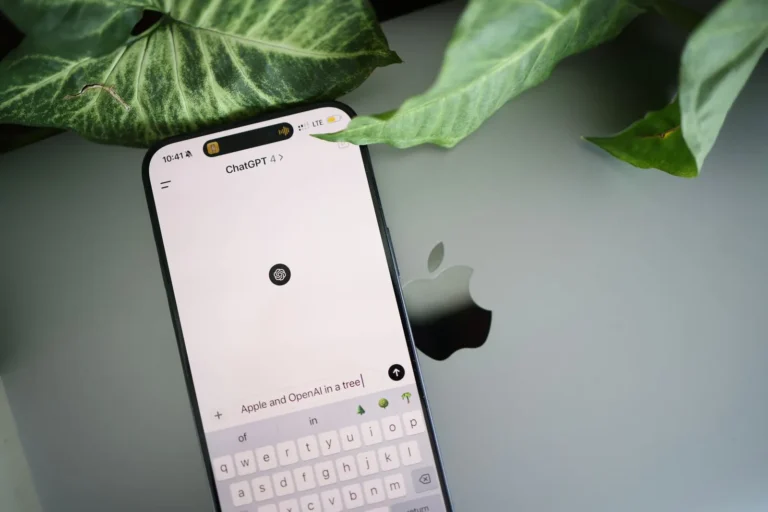
Ads appear beneath ChatGPT’s responses, visually separated from the generated content and clearly labeled as such; they target user intent rather than keywords—a mechanism that will influence how your own conversational agent captures attention and drives conversions.
The principle boils down to one sentence: OpenAI clearly separates the AI-generated response from the ad placement, so users never confuse the two. Technically, that’s good news for trust in the tool. Strategically, it’s a change of scenery for any business planning to attach an AI agent, a support chatbot, or a shopping assistant to it.
The real issue is intent-based targeting. ChatGPT doesn’t read isolated keywords the way a traditional search engine would: it understands the full context of the conversation to serve a relevant ad. An enterprise AI agent living in that same environment—via an API integration or a plugin—must contend with an audience already exposed to advertising messages built on that same intent principle. In other words: your chatbot is no longer alone in interpreting what the user wants.
What this concretely changes for a custom conversational agent
A well-designed enterprise AI agent must now anticipate that its user may have just encountered a contextual ad on a related topic. That means paying close attention to tone, response speed, and the clarity of the value proposition—because the competition for attention is no longer just on Google or social media; it’s happening right inside the AI conversation. With an average click-through rate of 0.91% observed on these ads, one user in a hundred has already interacted with a competitor’s message before even reaching your interface.
What will ChatGPT advertising look like for businesses integrating AI?
Visual advertising appears as integrated placements beneath responses, currently reserved for Free and Go accounts, with a format designed not to interrupt the conversation flow or alter the content generated by the AI itself.
OpenAI has been clear on one point: ads do not influence ChatGPT’s responses. This distinction protects the integrity of the generated content—an argument the company has repeated since the gradual rollout of this format in the United States.
How can you prevent your AI agent from being confused with an ad?
For a business building its own AI agent, the question isn’t just “do ads distort ChatGPT?” It’s “will my agent be visually mistaken for an ad, or perceived as a distinct and trustworthy channel?” Two pitfalls deserve close attention.
- A poorly identified AI agent risks being perceived as just another ad placement, especially if its interface resembles a generic widget.
- An agent that pushes a commercial offer too aggressively, without real conversational value, gets rejected by a user already saturated with solicitations.
- An agent that instead focuses on concretely solving a need (support, appointment booking, quotes) retains its credibility, even in a dense advertising environment.
ChatGPT advertising by the numbers: metrics to frame your strategy
The fact that 14.35% of ads appearing on ChatGPT were off-topic, according to an August 2026 measurement, shows that this intent-based targeting isn’t perfect yet. For an enterprise conversational agent, that’s almost an opportunity: the relevance bar to clear isn’t that high. The following table summarizes the numerical benchmarks available in 2026 for framing an advertising budget inside ChatGPT, with a notable gap between CPMs reported by different players—from €15 to €50 depending on the source.
| Metric | 2026 Value |
|---|---|
| Minimum daily budget | €15 |
| Recommended CPC | $3 to $5 |
| Observed CPM (Bouygues Telecom) | ~€15 |
| CPM reported by other players | €50 or more |
| Average CTR (March 2026) | 0.91% |
| Measured CTR (August 2026) | 0.50% |
| Minimum budget via tech partner | €5,000 |
For a business, the entry cost remains accessible for testing, with a minimum daily budget of €15. The CPM discrepancies across sources mean you need to manage your campaign with clear objectives rather than copying a number you read elsewhere. The €5,000 budget via a technology partner, meanwhile, is aimed at structured campaigns, not exploratory tests.
The real risk isn’t that ChatGPT displays advertising. It’s that a business deploys an AI agent without having thought through how it will visually and conversationally stand out from a standard ad placement.
How does ChatGPT advertising for business become a lever for your digital strategy?
This new channel adds to classic SEA and SEO as an additional touchpoint, but it forces you to rethink ad targeting around conversational intent rather than keywords, and to coordinate this presence with a conversational AI agent already active on your site.
A business that has already invested in paid search (SEA) knows the logic of keyword bidding. ChatGPT changes this paradigm: the ad is served based on what the user is trying to accomplish in their conversation, not on a typed query. This brings ChatGPT advertising closer to a conversational content logic than a pure bidding logic.
Concretely, a brand selling business software or B2B services has every interest in viewing this evolution as a new acquisition channel—provided it understands that OpenAI’s advertising activity surpassed $1 billion in annualized revenue in under 200 days. That growth rate signals a market taken seriously by advertisers, not a gadget in perpetual testing.
The mistakes that cost dearly at this stage
Many businesses confuse “being present in ChatGPT” with “having a high-performing AI agent in ChatGPT.” These are two different projects.
- Launching an ad campaign without a conversational agent to capture the conversation that follows the click.
- Copy-pasting a classic SEA strategy onto ChatGPT without adapting for intent-based targeting.
- Neglecting content optimization for conversational AI visibility (GEO), which conditions organic visibility even before paying for advertising.
- Ignoring that 25.94% of commercial queries tested in the United States already display an ad—a rate that will mechanically climb, making differentiation harder over time.
- Deploying a generic enterprise chatbot, with no tone or clear use case, that drowns in the same scenery as the ads.
The real lever is complementarity: a conversational AI agent well integrated into the company’s website, coupled with a carefully crafted upstream presence (SEO, GEO), is worth far more than a simple advertising budget thrown into ChatGPT with no strategy behind it. With a recommended cost-per-click between $3 and $5 and a minimum daily budget of €15, the challenge isn’t the entry ticket but the ability to convert conversational intent into measurable action.
How does ChatGPT advertising for business impact the evolution of your AI agent?
An enterprise conversational AI agent must now be designed to exist alongside—or even despite—a native advertising environment: this means refining its immediate value, clarifying its visual identity, and measuring its performance with its own indicators, independent of the surrounding advertising noise.
This is where the business angle becomes concrete. A company building a customer support chatbot, a telephone AI agent, or an appointment-booking assistant isn’t managing this project in a vacuum. It’s designing it for an ecosystem that is already monetizing user attention through advertising.
Two direct consequences. First, response speed and immediate relevance matter more than ever—a user exposed to multiple commercial solicitations in the same session has less tolerance for approximation. Second, the measurement approach must evolve: an enterprise AI agent is no longer judged solely on its resolution rate, but also on its ability to remain identifiable and useful in a stream where other players are vying for the same attention.
Depending on your situation
A B2B services SME wanting a lead qualification chatbot
For this SME, the urgency isn’t ChatGPT advertising itself, but the clarity of its agent: a chatbot that qualifies quickly, without jargon, with direct appointment booking. Priority goes to business framing and CRM integration rather than an exploratory ad budget—the return on investment comes first from a well-designed agent, not from a competitive ad placement.
An e-commerce startup considering a conversational shopping agent
Here, the intent-based targeting of ChatGPT Ads becomes a real playground: the startup can test a daily budget of €15 to measure an initial CTR, in parallel with developing its own shopping agent. The challenge is to synchronize both channels, not to treat them separately.
A mid-sized company that already has a contact center and wants a telephone AI agent
For a structure of this size, ChatGPT advertising remains secondary to the main objective: reducing the call center load. The voice agent must be framed with proven automation tools, independently of the advertising ecosystem—even if monitoring CPMs (€15 to €50 depending on the source) remains useful for anticipating future acquisition costs.
How to concretely create a visual ad campaign in ChatGPT
For now, the visual format isn’t available in self-service to all advertisers: OpenAI reserves it for a restricted group of selected companies, and no rollout timeline has been communicated for France, Belgium, Switzerland, or French-speaking Canada. But the structure taking shape for ChatGPT advertising in general already gives a clear idea of the path to follow once access is granted.
What are the verification steps to open an advertiser account?
Everything starts on OpenAI’s dedicated advertising platform, where you need to create an advertiser account. This step requires several verifications before you can serve any ad:
- Business identity verification
- Adding a payment method and configuring billing
- Uploading the brand logo
- Permanently setting the country, currency, and time zone associated with the account (these parameters cannot be changed later)
- Authorizing OpenAI’s advertising crawlers in the advertiser’s site robots.txt file, CDN, and web application firewall, without which landing pages won’t be properly explored
How to structure your campaign and choose your objective?
Once the account is validated, the campaign is built in three nested levels. The campaign sets the overall objective, budget, and flight dates. The ad group groups creatives by theme, carries the contextual targeting and the landing page. The ad itself contains the headline, description, image, favicon, the mandatory “Sponsored” label, and the final URL.
On the objectives side, the advertiser chooses between a reach logic (billed on a CPM basis) and a clicks logic (billed on a CPC basis, with a maximum bid set at the ad group level). A conversion objective also exists for advertisers tracking post-click actions.

What formats and technical specifications apply to visual ads?
ChatGPT’s central ad format, internally named “chat_card,” meets a precise and deliberately constrained specification. The headline accepts 3 to 50 characters, but the actual display truncates it around 24 visible characters: it’s better to concentrate the message in the first few words. The description allows up to 100 characters, also truncated to about 48 characters on screen.
For the image, the format is strictly square: 256×256 pixels minimum, 512×512 pixels recommended for better display quality. A 128×128 pixel favicon completes the card, alongside a non-negotiable “Sponsored” label and a destination URL compatible with UTM tracking. The ad card appears as a tinted placement, positioned directly beneath the response generated by ChatGPT.
What are the creative limitations of the current format?
One point worth emphasizing: this format excludes any video, any carousel, any classic display, and any interactive variant. It’s a static, simple card, designed to integrate into the conversation flow without disrupting it.
A derivative format exists for e-commerce: the shopping ad, which pulls the image and description directly from the advertiser’s product feed, with no additional manual creation required.
What new visual formats are being tested?
More recently, a new visual format was tested in the United States: it displays product visuals while ChatGPT generates an image for the user. The ad remains clearly labeled as advertising and visually distinct from the generated content. This test was limited to a restricted group of advertisers and users on the free and Go plans.
Working on a project like this? See our dedicated page: pay-per-click advertising (sea).
A concrete project on this topic? See our dedicated page: agence web cannes.
FAQ — Visual advertising in ChatGPT and enterprise AI agents
What are the risks of poor ad integration for my AI agent’s user experience?
The main risk is visual confusion: an AI agent poorly differentiated from an ad placement loses credibility. The user, already solicited, quickly turns away from a chatbot perceived as a commercial relay rather than a useful and reliable tool.
How can I measure the effectiveness of visual ads in ChatGPT for my business?
Track CPC ($3 to $5 recommended), CPM (€15 to €50 depending on the source), and CTR, which varied from 0.91% in March 2026 to 0.50% in August 2026. Compare these figures to your own conversions, not just the traffic generated.
Are there best practices for creating impactful visual ads in the ChatGPT ecosystem?
Focus on a clear message, well-targeted intent, and total consistency with the tone of your conversational agent. Avoid being off-topic: 14.35% of ads served in August 2026 were deemed irrelevant—a pitfall easily avoided with proper framing.
This advertising shift in ChatGPT doesn’t undermine the value of deploying a conversational AI agent there—it simply demands doing so with serious framing, designed to last in the face of an environment that is monetizing fast. If you’re considering integrating a chatbot, a voice agent, or automation into your business, an agency that masters both custom development and AI integration can help you lay the right foundations from the start, on a quote after scoping.