

































 Landing page
 E-commerce website
 UX/UI design
 Business software & ERP
 SaaS software
 B2B client portal
 Web App & PWA
 Mobile app
 Artificial Intelligence
 Organic SEO
 AI SEO & GEO



A Mauritian prospect types “reliable web agency Mauritius” into ChatGPT instead of Google. They get a response with three names, not ten blue links. If your SMB isn’t listed there, you simply don’t exist in that conversation, and you’ll never know it, because no one will send you an email to tell you. That’s exactly what the arrival of the ChatGPT Business Profile changes, and now is the time to address it.
The ChatGPT Business Profile is a verified listing, launched by OpenAI in November 2026, that lets an SMB claim its official information and track its mentions in AI-generated responses. For a small or medium-sized business, it’s a new visibility lever to manage alongside your Google Business Profile.
- ChatGPT Business Profiles shift SMB visibility into AI conversations: a prospect querying the tool sees only the entities the AI deems relevant, not a results page.
- Claiming and maintaining your profile prevents a less legitimate competitor from occupying your spot in generated responses.
- Claiming in Business Hub takes 10 to 15 minutes, but genuine optimization requires deeper, ongoing work.
- Business Hub statistics cover a rolling 28-day window, a metric to monitor continuously, not a static snapshot.
- Integrating a custom AI agent opens customer interaction opportunities that go far beyond a simple information card.
- A proactive AI search strategy is essential to control your reputation within these new ecosystems.
Is the ChatGPT Business Profile available in France and Mauritius for SMBs?
Yes, broadly speaking: any identifiable business can attempt to claim its listing via Business Hub, wherever it’s based, but some advanced features, such as Business Agents, remain geographically limited, with an initial rollout centered on the United States.
An SMB in Mauritius or a regional SMB in France doesn’t access exactly the same service level as a US-based company at launch. The basic listing, name, activity, official information, mention statistics, is widely accessible. Brand-dedicated conversational agents, however, follow a progressive deployment schedule. For a Mauritian business owner who wants to be found by a French prospect searching for a web agency, or vice versa, the basic listing, the one that truly matters for visibility, is already workable on both sides.
What this concretely changes for an SMB based in Mauritius
A Mauritian SMB selling to a French clientele or seeking local clients faces a dual challenge: appearing correctly in ChatGPT responses for both zones. The Business Profile doesn’t distinguish between “French market” and “Mauritian market”, it reflects what the AI knows about you, period. If your activity, hours, and service area aren’t clear in the sources ChatGPT consults (website, third-party listings, press mentions), the profile will be incomplete, regardless of your country of registration.
GEO service comparison by budget
Structuring your visibility in conversational AI costs across three distinct tiers: an initial audit starting from €2,500 excluding tax, a complete strategy from €3,500 excluding tax, and monthly monitoring from €2,500 excluding tax per month for deployment and ongoing management.
| Service | Starting price | Frequency |
|---|---|---|
| GEO Audit | from €2,500 excl. tax | one-off |
| GEO Strategy | from €3,500 excl. tax | one-off |
| GEO Deployment & Monitoring | from €2,500 excl. tax | monthly |
For a business owner discovering this topic, it changes how you budget: it’s not a one-off expense like a brochure website; it’s a project that starts with a diagnosis, gets structured into a strategy, then lives month to month, much like local SEO, but on still-new terrain.
ChatGPT Business Profile for SMB visibility: where to start concretely?
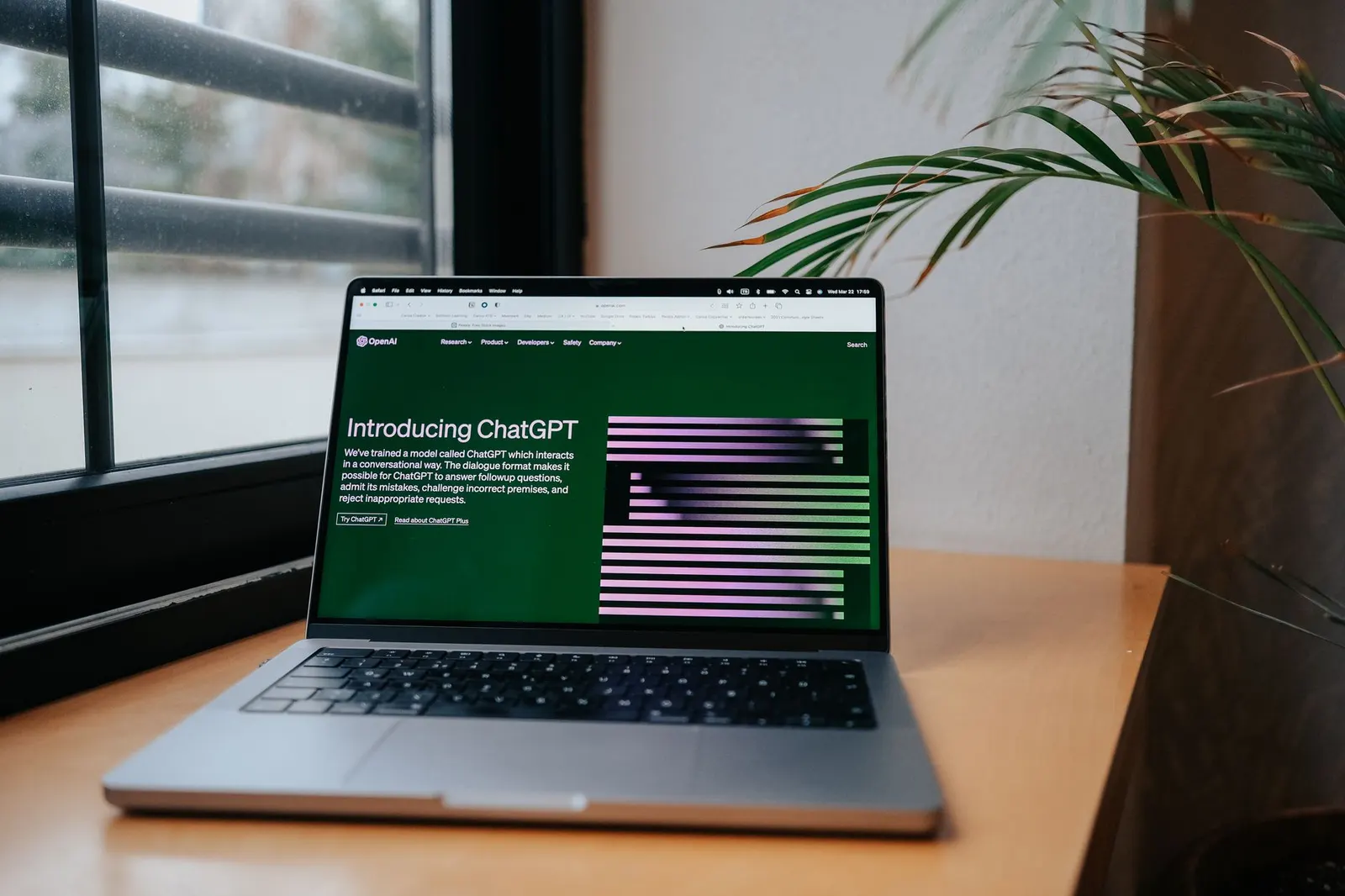
A ChatGPT Business Profile for SMB visibility can’t be improvised: it rests on three verifiable pillars. First, claiming the listing in Business Hub, which takes 10 to 15 minutes but conditions everything else. Second, information consistency: the name, address, and description must match your website and Google listing word for word, otherwise the AI retains contradictory versions. Third, monthly monitoring of statistics over the 28-day window: a spike in mentions without renewal drops back to zero a month later. An SMB applying these three actions typically sees its first appearances in responses within four to six weeks, provided its sector and geographic area are covered by OpenAI’s progressive rollout.
How long does it take to create and optimize a ChatGPT Business Profile?
The technical claim takes 10 to 15 minutes: that’s the easy part. Genuine optimization, consistent content, reliable external mentions, statistics monitoring, spans several weeks and never really stops.
The classic trap is confusing the two timelines. Ten minutes to tick a box in Business Hub, yes. But a claimed, substance-empty listing is useless: ChatGPT continues to pull from whatever else it finds about you, good or bad.
How to claim your listing in 10 to 15 minutes?
- Search for your business in Business Hub to check if a listing already exists.
- Claim the listing via OpenAI’s verification process.
- Enter your business type, contact details, and official description.
- Verify consistency between this information and your website, Google listing, and social media.
- Consult mention statistics over the rolling 28-day window.
- Correct any erroneous information the AI may have picked up elsewhere.
- Repeat the check every month, not once and never again.
Why is optimization an ongoing effort?
The 28-day window deserves a closer look. It’s not a complete history; it’s a rolling snapshot: a spike in mentions following a press campaign will disappear from your statistics a month later if nothing renews it. Concretely, this means a ChatGPT Business Profile isn’t “configured” once and for all, it’s managed, like a Google Business Profile or an Ads account.
Why claiming isn’t enough: how to optimize your visibility in conversational AI?
Because ChatGPT doesn’t read your listing in a vacuum: it cross-references your profile with everything else it finds on the web, and a clean listing backed by a vague website or contradictory reviews convinces no one, neither the AI, nor the prospect reading its response.
Claiming your listing in Business Hub takes 10 to 15 minutes. That’s the bare minimum. What truly makes the difference is the consistency of your presence across the entire web: your website, your customer reviews, your press mentions, your internal SEO linking that helps engines, human and AI, understand your actual business.
Costly mistakes in this area
- Leaving a listing claimed but never updated after a change in offering or address.
- Neglecting customer reviews on third-party platforms, which the AI uses to assess a business’s reliability.
- Having a website whose content contradicts what’s declared in the profile.
- Treating AI search as a topic isolated from classic SEO, when the two feed each other.
- Ignoring mention statistics: Business Hub data aggregates activity from the last 28 days, a metric ChatGPT can correlate with the freshness of your information.
Online reputation management thus becomes a cross-functional project, not a box to tick. An SMB with a 5.0 out of 5 rating on its Google listing, on Trustpilot, and on review platforms, as is the case for Skyward Agency, starts with a clear advantage: the conversational AI has more consistent material to cite in your favor. Conversely, a business with scattered, contradictory reviews sends a confused signal that ChatGPT echoes in its responses.
A well-maintained ChatGPT Business Profile doesn’t replace a digital strategy; it extends it into a channel your competitors still largely ignore. That’s precisely the benefit of acting now, before everyone jumps in.
How much does an AI agent cost for an SMB in 2026? Budget, hidden costs, and ROI?
A conversational AI agent for an SMB is budgeted in two stages: custom development, variable depending on complexity, then monthly hosting and maintenance, the hidden costs almost always come from the second part, overlooked at the quoting stage.
Many business owners still think as they do for a brochure website: one price, one time, done. An AI agent, qualification chatbot, voice agent to filter incoming calls, appointment booking automation, works differently. It consumes resources with every interaction, must be trained on your data, and requires monitoring to correct its understanding errors over time.
The profitability threshold, concretely
Investing in a custom AI agent becomes truly relevant when the volume of repetitive requests exceeds what one person can absorb without error: an SMB receiving several dozen similar requests per week (quotes, appointment bookings, questions about hours) recoups the automation investment much faster than a structure receiving two or three. Below that volume, a simple, well-designed form often suffices, no need for an AI agent for that.
- Custom chatbot or voice agent development: quoted after scoping, depending on scenario complexity.
- Monthly hosting and maintenance: recurring cost often underestimated in initial quotes.
- Continuous training and adjustment of the agent on your business data: human time to anticipate, not just technical.
- Integration with your existing tools (CRM, calendar, website): cost item frequently forgotten at initial scoping.
The real danger is scoping an AI agent without planning for this last point. We’ve seen projects where the chatbot worked perfectly… in a vacuum, disconnected from the CRM, forcing the team to manually re-enter every captured exchange. The hidden cost wasn’t in development; it was in the missing integration.
GEO costs range from €2,500 excl. tax to €3,500 excl. tax depending on the service
A conversational AI search audit starts at €2,500 excl. tax, a complete strategy at €3,500 excl. tax, and monthly deployment monitoring resumes on a basis of €2,500 excl. tax per month, three distinct budget items for an SMB wanting to be visible in ChatGPT.
How to budget these three lines without making a mistake?
For an SMB, this means budgeting these three lines separately. Monthly monitoring at €2,500 excl. tax commits €30,000 excl. tax over a year, twelve times the initial audit amount. Compare quotes on billing frequency, not just the face price.
| Item | Value (€ excl. tax) |
|---|---|
| Audit | €2,500 excl. tax |
| Strategy | €3,500 excl. tax |
| Monthly monitoring | €2,500 excl. tax |
These three amounts are the entry thresholds for each GEO service (conversational AI search optimization). The final budget varies according to the volume of keywords to cover and the number of locations to reference.
One-off audit or monthly monitoring: what’s the cost difference over a year?
The chart shows it: the audit and monthly monitoring start at the same level, but their nature is completely different. The audit is a one-off diagnosis, we look at where you stand. Monthly monitoring, on the other hand, repeats each month: over a year, it represents by far the heaviest item. This is one of the points business owners discover too late when comparing quotes without looking at billing frequency.

Can a web agency create and manage the ChatGPT profile for its SMB clients?
Yes: an agency mastering both web development and AI integration can claim, structure, and monitor an SMB client’s ChatGPT Business Profile, exactly as it already manages their Google Business Profile and local SEO.
The dual web + AI skill set within the same team changes the game. A provider who only does code will never see the point of monitoring mention statistics over a rolling 28 days. A provider who only does generative AI won’t have the reflex to check that your website corroborates what your profile says. You need both perspectives simultaneously.
What delegated management concretely provides
Entrusting this monitoring to an agency avoids the most frequent pitfall: claiming the profile once, then forgetting it. Claiming in Business Hub takes 10 to 15 minutes, but structured monthly monitoring, initial audit, consistent content strategy between site and profile, mention watch, demands a discipline few SMB owners have the time to apply alone, between operational management and everything else. The agency then becomes the single point of contact carrying the topic from scoping to monitoring, with a client space to visualize progress.
- Audit the company’s current presence in ChatGPT and other conversational AIs.
- Officially claim the profile via Business Hub.
- Align website content with the information declared in the profile.
- Build a content strategy feeding both classic SEO and AI search.
- Monthly monitoring of mention and click statistics.
- Adjust strategy based on conversation themes identified around the brand.
ChatGPT Business Profile: what strategy for your SMB?
A solo artisan with a simple brochure site doesn’t need a custom AI agent, out of budget and out of need at this stage. Their priority: a claimed Business Hub listing, a website consistent with it, and regularly solicited customer reviews. Claiming takes 10 to 15 minutes. A GEO audit, starting from €2,500 excl. tax, is a good one-off starting point, without necessarily moving straight into monthly monitoring. The essential thing remains having a solid brochure site before stacking channels.
An SMB with 20 employees in France receiving many repetitive requests
Here, the calculation changes: the volume of requests justifies a lead qualification AI agent, coupled with monthly GEO monitoring to capture prospects coming through ChatGPT. The €3,500 excl. tax strategy budget is justified because the business has enough inbound traffic for optimization to produce a measurable return quickly, unlike a structure with little flow.
A mid-sized company already having strong classic SEO notoriety
This structure probably already has a solid web presence and worked-on local SEO. The risk for them isn’t absence, but inconsistency: multiple departments, multiple spokespeople, sometimes contradictory information depending on the sources ChatGPT cross-references. The priority task is an informational consistency audit before any dedicated AI agent deployment, to prevent a misaligned listing from diluting an already-built reputation.
The complete procedure to claim your profile, step by step
Before starting, you need to check your eligibility: only the owning company, or a person mandated to represent it, can initiate the process. Profile availability depends on the business sector and the company’s geographic area. Once this prerequisite is validated, claiming unfolds in several well-defined stages.
The five steps of claiming in Business Hub
- Login and access to Business Hub: log into your ChatGPT account then open the dedicated business space, Business Hub.
- Search for the listing: type the exact company name into the Hub’s internal search engine to locate its existing listing.
- Selection and confirmation: choose the corresponding listing and confirm that the ChatGPT account used will be the one managing the profile going forward.
- Choice of verification method: several options are offered, business phone number, company email address, website domain name, or connection via Shopify for online stores. Each method then follows its own on-screen instructions.
- Waiting for validation: OpenAI reviews the request before approving it; no precise timeframe is communicated on this point, so it’s better to allow a margin before planning any communication around the verified profile.
How to get the verification checkmark after validation?
Once the claim is validated, a second step is required to obtain the verification checkmark: identification via the Persona provider. You must then provide an official ID document, the company’s legal registration information, and proof of authorization to represent it. A practical tip: use the exact legal name of the company, identical to that in official registries, to avoid any rejection of the file during the identity check.
The criteria determining a business’s visibility in ChatGPT responses
Beyond the simple consistency of information displayed on the listing, several technical levers weigh on the probability of a business being cited in a response. The first is eligibility for the profile itself: only businesses with a website and validated by OpenAI’s integrity checks can claim and enrich their listing. This claim, materialized by a verification checkmark, doesn’t guarantee better ranking per se, but conditions access to the features that allow influencing visibility: updating key information, adding product feeds with prices and availability, and for e-commerce or online service businesses, activating a conversational agent allowing users to interact directly with the brand.
The second lever, more structural, falls under classic organic search. Available studies show a near-perfect correlation between the volume of positioned organic keywords and citation frequency on AI platforms, ChatGPT included. Organic site traffic also shows a strong correlation with these citations. Concretely, this means a well-structured site, covering a broad semantic field and attracting substantial natural traffic, is statistically more likely to be mentioned in a generated response.
In practice, optimization is therefore not limited to correctly filling out your listing: it requires foundational work on site architecture, the richness of indexable content, and the solidity of upstream natural search.

Measuring return on investment: which indicators to track and how to interpret them
Business Hub provides a dashboard with four exploitable indicators, provided you understand their limits well. Mentions count the number of ChatGPT responses referencing the company’s website, a simple brand name citation without a link doesn’t count. For a physical store, the equivalent indicator measures the number of times the establishment appears in a response. Clicks indicate how many times a user clicked on the link to the site from a ChatGPT conversation; note, this figure confirms neither the actual visit nor any conversion; it’s an intent signal, not a commercial result. Discovery themes group up to five recurring topics in conversations where the business appears, offering a qualitative reading of user expectations rather than a performance figure. Finally, profile views count the openings of the listing, an indicator not systematically displayed depending on accounts.
Why an empty box doesn’t mean an absence of visibility?
This data is available over 7- or 28-day windows, with filtering: below a certain activity volume, no figure is displayed, to preserve user privacy. An empty box therefore doesn’t mean a total absence of visibility, but an activity level too low to be reliably reported.
How to cross-reference Hub data with your real conversions?
To assess the profitability of a monthly deployment and monitoring budget, the most rigorous method consists of cross-referencing these mentions and clicks with the site’s internal conversion data, completed forms, requested quotes, attributed sales, over the same 28-day period, then comparing this generated value to the cost incurred. Without this reconciliation with the company’s own analytics tools, Business Hub statistics remain trend signals, not proof of return on investment.
Working on a project like this? See our dedicated page: web agency for small businesses and.
FAQ on the ChatGPT Business Profile
How can ChatGPT benefit my business?
ChatGPT can benefit your business by serving as a new discovery channel where prospects find verified, consistent information about your company. A properly maintained ChatGPT Business Profile ensures you appear in AI-generated responses when potential customers search for your services, capturing demand that would otherwise go to competitors who have already claimed their presence in this ecosystem.
Is ChatGPT good for business?
Yes, ChatGPT is good for business when approached strategically. It’s not a replacement for your website or Google listing, but a complementary visibility layer. The AI cross-references your profile with everything it finds online, so a verified, consistent presence across all platforms strengthens your credibility both with the AI and with the prospects reading its responses.
What are the risks of using ChatGPT for business?
The primary risk is silent invisibility: a claimed and optimized competitor will appear in responses in your place, without any alert warning you. You lose prospects without ever knowing the conversation happened. Additional risks include information inconsistency if your website contradicts your profile, and neglecting the rolling 28-day statistics window, which can cause a visibility spike to vanish if not renewed.
How to integrate ChatGPT into existing business systems?
Integrating ChatGPT into existing business systems starts with claiming your profile in Business Hub, then aligning your website content, Google Business Profile, and third-party listings for consistency. For businesses with higher request volumes, a custom AI agent can be connected to your CRM, calendar, and website to automate lead qualification, appointment booking, and customer inquiries, but this requires scoping the integration from the start to avoid costly rework.
The ChatGPT Business Profile isn’t a communication gimmick; it’s a new entry point for your prospects, and like any entry point left empty, it fills itself with whatever the AI finds elsewhere, for better or worse. If you want to frame this project correctly, from diagnosing your current AI visibility to deploying a conversational agent if your volume justifies it, let’s talk during an initial scoping conversation.