

































 Landing page
 E-commerce website
 UX/UI design
 Business software & ERP
 SaaS software
 B2B client portal
 Web App & PWA
 Mobile app
 Artificial Intelligence
 Organic SEO
 AI SEO & GEO



OpenAI AI Training Control: How to Use Robots.txt to Protect Your Content
A business leader deploying a chatbot or AI agent for their company asks a question they rarely get asked in return: who’s training on your own content? OpenAI’s October 30, 2026 announcement about a shared robots.txt signal changes the game for anyone running a serious digital strategy. This is no longer a niche SEO technician’s concern, it’s a data governance decision that belongs at the executive level.
OpenAI AI training control via robots.txt relies on a standardized directive that webmasters place in their robots.txt file to tell AI crawlers whether they allow their content to be used as a training dataset. OpenAI announced on October 30, 2026 that it supports this shared signal, with a phased rollout starting in November 2026.
- OpenAI introduces a standardized robots.txt signal to clearly express a training opt-out, separate from traditional crawl rules.
- Leaders integrating AI must review their web data governance policy before, not after, deploying their own tools.
- It becomes possible to differentiate an AI bot (GPTBot, OAI-SearchBot) from a classic indexing bot like Googlebot.
- Blocking AI crawlers protects content against poorly controlled content exclusion and unwanted use for model training.
- This directive is a concrete lever for intellectual property protection, not just a technical checkbox to tick.
What Are AI Bots and How Do They Differ from Traditional Indexing Bots?
An AI bot is an automated program that crawls the web to collect content intended to train or feed AI models, whereas a traditional indexing bot (Googlebot, Bingbot) collects content to display it in search results.
Confusion is common among leaders new to the topic: they assume every crawler visiting the site does the same thing. Wrong. Googlebot indexes to display your page in search, your traffic depends on it directly. An AI crawler like GPTBot scrapes text to feed a training dataset: your content becomes raw data, with no backlink, no click, no visit.
OpenAI operates two distinct agents, and the nuance matters for anyone wanting to control their visibility:
- GPTBot: collects content for AI model training.
- OAI-SearchBot: powers ChatGPT’s real-time search functions, closer to an indexing logic.
Each is controlled independently in your robots.txt. An e-commerce site may very well want to appear in ChatGPT responses (thus allow OAI-SearchBot) while refusing to let its product pages serve as a training dataset (thus block GPTBot). This is precisely what OpenAI’s technical documentation allows you to configure.
AI Bot Comparison by Function
The following table shows the fundamental opposition between an indexing bot and an AI bot: one serves your organic visibility, the other serves a third-party model’s training with no direct traffic return for you.
| Bot | Purpose | Traffic Impact |
|---|---|---|
| Googlebot | Search engine indexing | Direct, via clicks |
| GPTBot | Model training | None, no click |
| OAI-SearchBot | ChatGPT real-time search | Indirect, via citation |
| ClaudeBot (Anthropic) | Model training | None, no click |
In practice, a leader must arbitrate line by line: what feeds your conversational AI visibility (GEO) stays open, what feeds a competitor’s training dataset gets closed. This is not a binary all-or-nothing choice.
How to Set Up Effective OpenAI AI Training Control via Robots.txt?
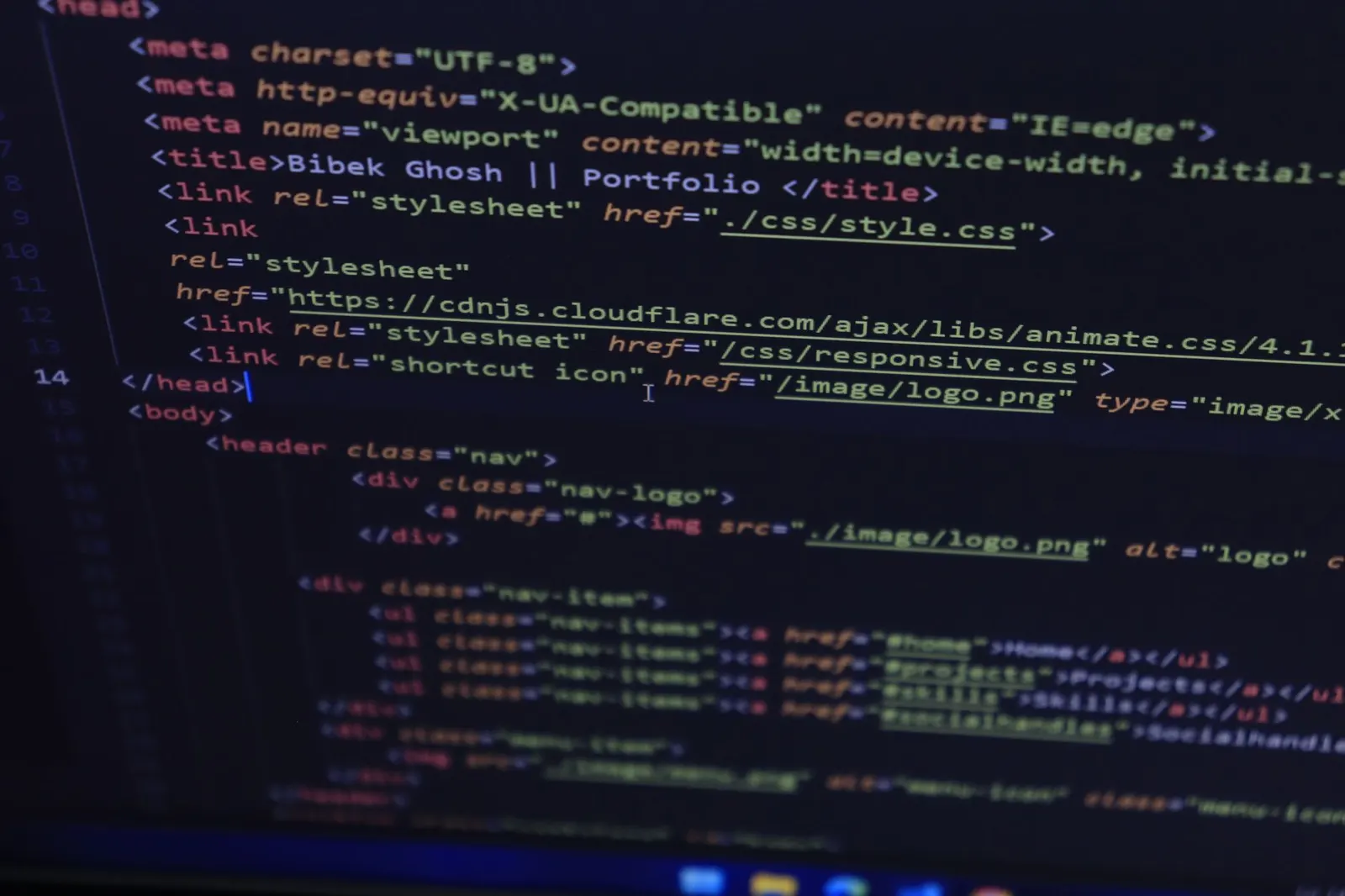
OpenAI AI training control via robots.txt relies on an explicit rule targeting GPTBot, OpenAI’s official training crawler. The directive is written in the robots.txt file as a User-agent: GPTBot block followed by Disallow: / for total exclusion, or specific paths for partial restriction. Since the October 30, 2026 announcement, OpenAI plans to support a standardized signal shared across multiple providers, which will simplify control in the long run. In the meantime, verifying the actual enforcement of the rule requires server log analysis: a site that declares it blocks GPTBot but still sees requests from this agent in its access logs does not have effective control. Compliance is tested, not decreed.
Do AI Bots Respect Robots.txt and What Does OpenAI’s Announcement Change?
OpenAI respects robots.txt for its official crawlers (GPTBot, OAI-SearchBot) and announced on October 30, 2026 its support for a standardized anti-training signal, with effective support expected from November 2026, aligned with an IETF draft authored by Anthropic.
It was long believed that each AI provider imposed its own syntax, a maintenance nightmare for anyone managing multiple sites. In reality, the real problem lay elsewhere: the lack of a common standard forced webmasters to duplicate different rules for GPTBot, ClaudeBot, or other crawlers.
What Is the Deployment Timeline for the Standardized Signal?
The IETF draft behind the shared signal, authored by Kevin Kelley at Anthropic, is dated October 30, 2026, with an expiration set for May 3, 2027, a classic validity window for this type of technical document undergoing standardization. The deployment timeline itself spans several months:
- Anthropic began implementing support in November 2026.
- OpenAI plans its support in the following months, starting November 2026.
- Google aims for full signal support by 2027.
- Microsoft (Bing) will recognize the new token starting February 1, 2027, with a transitional preference available in its webmaster tools as early as December 15, 2026.
What Does This Convergence Change in Concrete Terms for a Leader?
What changes for a leader: before this convergence, blocking training meant knowing and maintaining one rule per player. With a shared signal, a single directive in robots.txt addresses all AI models that respect it, provided they implement it, which is neither automatic nor immediate. The classic mistake is deploying the directive and then considering the matter closed. In reality, each provider activates support at its own pace: a site that adds the signal today is still scraped by crawlers that haven’t implemented it yet, which skews the coverage audit if deployment dates aren’t cross-referenced with logs.
The Fate of the Old NoArchive and NoCache Tags
Microsoft (Bing) will stop honoring the old NoArchive and NoCache tags for AI preferences after March 1, 2027. If your site relied on these historical tags to signal a usage refusal, they become obsolete on that date. A leader who delegated their SEO several years ago without a recent audit is likely to still have these old tags in place, unaware they will lose their effect. The data governance challenge often starts with a simple technical audit: what is actually written in your robots.txt today, and does it still match your intended policy?
How to Block AI Bots While Allowing Google Search: The Practical Method?
Blocking AI bots without affecting Google ranking involves targeting the specific user-agents of AI crawlers (GPTBot, ClaudeBot) in robots.txt, while leaving Googlebot and Bingbot untouched, the two logics are independent and controlled separately.
This is the question that comes up most often with clients discovering the topic: “if I block AI, do I disappear from Google?” No. Each robots.txt rule applies to a specific user-agent. Blocking GPTBot has absolutely no effect on Googlebot, which remains a completely distinct agent, managed by its own line.
What Are the Steps to Configure Selective Blocking?
- Open or create the robots.txt file at the site root.
- Identify the AI user-agents to target (GPTBot, OAI-SearchBot, ClaudeBot, according to the desired policy).
- Add a dedicated
User-agentblock for each AI bot to restrict. - Declare
Disallow: /under that block to block the entire site for that bot, or target specific directories. - Leave intact or add a separate block for Googlebot with
Allow: /. - Verify that no generic rule (
User-agent: *) contradicts the specific rules. - Test the file via a robots.txt validation tool before going live.
- Document the chosen policy in your internal data governance.
Why Can a Syntax Error Compromise Everything?
Technically, the file is nothing exotic. In a developer’s logic, it’s the equivalent of a simple condition: const isAIBot = true; if (isAIBot) return "disallow";, a structure that, depending on the detected user-agent, returns a different rule. Nothing complex, but a syntax error is enough to render the rule inoperative, or worse, to accidentally block Googlebot along with the rest.
The Costly Mistake: Blocking Too Broadly
The classic mistake is the generic block copied and pasted without user-agent distinction. A client shows up with a robots.txt that blocks “any unrecognized bot” thinking they’re targeting AI, and ends up excluding legitimate SEO audit tools, or even some social media crawlers useful for content sharing. The result: organic search rankings that drop with no apparent explanation, and weeks lost figuring out why. The rule to remember: you target each AI bot you want to block by name, never by general exclusion.
The real risk isn’t blocking AI, it’s doing it without a method, and discovering three months later that Google Search paid the price too.

What Happens If You Block AI Bots and What Are the Stakes for Your Business?
Blocking AI bots prevents your content from feeding third-party model training, protects your intellectual property, but also reduces your visibility in responses generated by ChatGPT or other assistants, a strategic trade-off, not a neutral decision.
Here lies the real governance issue. Content excluded from training can no longer be reformulated, summarized, or cited without attribution by a competing AI model. For a company that has invested in expert content, a dense technical blog, extensive product documentation, this is real protection against a form of silent scraping.
Does Blocking Training Suffice to Disappear from ChatGPT Responses? The Trade-Off Based on Your Profile
Blocking training doesn’t necessarily prevent appearing in ChatGPT responses, it all depends on which agent you block. Blocking OAI-SearchBot, however, removes you from ChatGPT’s real-time search results, which directly impacts your conversational AI visibility strategy (GEO). For a Mauritian company or French business selling online services, the trade-off is concrete:
- An e-commerce site with unique product pages has an interest in protecting its training content, while remaining visible in AI search results to capture qualified traffic.
- An institutional site or expert blog must assess whether visibility in ChatGPT justifies exposing long, costly-to-produce content.
- A company subject to confidentiality constraints (customer data, sensitive industry information) has every interest in blocking broadly, even at the cost of losing AI visibility.
Based on Your Situation
A Mauritian service SME selling B2B services online
Your main content consists of service pages and detailed case studies, difficult to produce. The challenge: preventing a competitor from using a model trained on your content to generate similar pages at lower cost. Recommendation: block GPTBot on high-value content pages, keep OAI-SearchBot open to remain visible in prospect ChatGPT searches.
An e-commerce site with a large product catalog
Your product pages are often already duplicated by suppliers or aggregators, exclusivity is low. What matters here: the volume of traffic generated by conversational AIs recommending your products. Recommendation: leave crawlers open on the catalog, reserve blocking for proprietary editorial content (buying guides, internal comparisons).
A startup publishing a sharp technical blog to establish expertise
Your content is your main asset for credibility and differentiation. What matters: not seeing your analyses reformulated without attribution in generic AI responses. Recommendation: block GPTBot on the entire blog from publication, even if it means accepting reduced AI visibility, content scarcity remains your best commercial argument.
Where Should You Place Your Robots.txt File and How to Ensure Compliance?
The robots.txt file must be placed at the domain root (example: mysite.com/robots.txt), publicly accessible, written in plain text, and follow precise per-user-agent block syntax to be read correctly by AI crawlers and search engines.
A misplaced file, in a subfolder, for example, is simply ignored. Crawlers, whether AI or traditional indexing, systematically look at the root. No exceptions.
What Are the Technical Checkpoints for a Reliable Configuration?
On the technical side, here’s what to verify for a reliable configuration:
- The file responds with HTTP 200 code, not a 404 or 403 error.
- Encoding is UTF-8, without misinterpreted special characters.
- Each
User-agentblock is followed by its ownAlloworDisallowrules, without mixing with another block. - No contradictory rules between a generic block and a block specific to a named bot.
How to Monitor the Actual Enforcement of Your Rules?
For a WordPress site, management is often done via an SEO plugin or by directly editing the file at the server root, a technical vigilance point that falls more to a provider than to blind manipulation in production. A poorly tested configuration can break a site’s complete indexing overnight.
On the monitoring side, think event tracking and server logs: a good reflex is to observe, in access logs, which user-agents actually visit the site, and to compare this list against your declared policy in robots.txt. Some crawlers ignore the directive, we’ll come back to that shortly.
Compliance and Internal Documentation
Beyond the technical file, the real governance question is: who decides the policy, and who documents it? A leader integrating AI into their company (chatbot, voice agent, automation) must ensure that their own use of third-party web content respects the same rules they impose on their visitors. Consistency matters as much as technique.
Working on a project like this? See our dedicated page: web agency for education and training.
FAQ, OpenAI AI Training Control, Robots.txt, and Data Governance
How Does OpenAI Train Its AI Models, and How Is That Different from Search Indexing?
A search engine indexing bot (Googlebot) collects content to display it in search results and generate traffic to your site. An AI bot (GPTBot) collects content to train a model, with no backlink or direct traffic for the visited site. Understanding how OpenAI trains its AI is essential to grasp why these crawlers operate under a fundamentally different logic from traditional search bots.
Can Users Influence OpenAI’s AI Training by Blocking Only AI Bots While Allowing Google Search?
Yes, absolutely. Each bot is controlled via its own User-agent block in robots.txt. Blocking GPTBot or ClaudeBot does not affect Googlebot in any way, which remains managed by an independent rule, provided no contradictory generic rule is used. This is the primary mechanism through which users can influence OpenAI’s AI training and protect their content.
What About Non-Compliant Bots That Ignore Robots.txt?
Robots.txt is a directive, not a technical barrier: some malicious crawlers simply ignore it. For stricter protection, complementary solutions like IP address blocking or application firewall reinforce the declarative directive. This is a key part of OpenAI data governance and broader content protection strategy.
How Does OpenAI Address Bias in AI Training, and How Can I Verify My Robots.txt Is Correctly Configured for AI Bots?
While how OpenAI addresses bias in AI training involves multiple layers of content moderation and ethical guidelines, verifying your own configuration is straightforward: directly visit mysite.com/robots.txt in a browser, check for dedicated blocks for GPTBot and OAI-SearchBot, test the syntax via a validation tool, then cross-reference with your server logs to confirm that the targeted bots actually respect the declared rule. OpenAI’s content moderation training and ethical AI training frameworks are separate considerations from the technical blocking mechanism.
This shared signal doesn’t solve everything, and its deployment spans several months depending on the players, Anthropic has already started implementation in November 2026, OpenAI plans to support it in the following months, Google targets 2027, and Microsoft (Bing) will recognize the new anti-training token starting February 1, 2027. But it changes one concrete thing: a leader no longer needs to be a technical expert to regain control over their web data. If your company is preparing to integrate a chatbot, an AI agent, or automation and your data governance hasn’t yet been audited from this angle, now is the time to talk with a team that masters both web development and AI integration.