

































 Landing page
 E-commerce website
 UX/UI design
 Business software & ERP
 SaaS software
 B2B client portal
 Web App & PWA
 Mobile app
 Artificial Intelligence
 Organic SEO
 AI SEO & GEO



A CIO who outsources software development without mapping out the risks upfront usually discovers the problem at the worst possible moment: at delivery, when the code fails security tests, or worse, when a competitor releases a feature eerily similar to yours. Software outsourcing risks are not an inevitable fate to endure, they are a variable to manage like any other project parameter. The good news: the risks that cause offshore projects to fail are known, documented, and avoidable with the right method.
Mastering software outsourcing risks means mapping out the risks (quality, security, intellectual property, communication) before signing, then framing them with a precise contract and agile governance throughout the project.
- Map out project-specific risks before any request for proposals
- Choose a partner verified on references and financial stability
- Formalize a service contract covering intellectual property and data security
- Implement agile governance with regular synchronization checkpoints
- Secure access and data environments from the very first sprint
- Plan for an acceptance testing and quality assurance phase independent of the dev team
- Track risk indicators throughout the project, not just at delivery
- Identifying and assessing the risks of outsourcing software development is the first step to mastering them.
- A contract that defines intellectual property clauses and non-compliance penalties reduces legal surprises.
- Protecting intellectual property and data security must be absolute priorities in any offshore partnership.
- Checking the provider’s financial health and auditing two delivered references prevents discovering instability mid-project.
- Integrating AI into an offshore SaaS requires rigorous planning to guarantee performance and security.
How to successfully outsource software development?
Outsourcing successfully means treating the project as a long-term partnership, not a one-off service purchase: precise scoping, a partner chosen on objective criteria, and agile governance maintained from the first sprint to the last.
The global software development outsourcing market is worth $618.38 billion in 2026, up from a projected $564.22 billion in 2025, a growth that reflects a fundamental shift, not a passing trend. But this figure hides a reality: the majority of failures don’t come from the chosen provider; they come from sloppy upfront scoping. People long believed the main success factor was the developer’s hourly rate. In fact, it’s the quality of the specifications and the clarity of acceptance criteria that determine whether the project meets its deadlines.
Offshore business application development reviews: what experience feedback tells us
Feedback on offshore business application development converges on one point: successful projects are those where the client maintained an active product owner role, not just that of a sponsor waiting for delivery. Negative reviews almost always point to the same cause, a vague brief handed to a team that filled in the gaps with its own assumptions. Conversely, positive feedback mentions weekly synchronization points, regular demos, and direct access to developers, not just a filtering project manager. The lesson: a good offshore provider absorbs ambiguity by asking questions; a bad one sidesteps it by delivering something that “works” but doesn’t match the real need.
How to conduct a risk analysis?
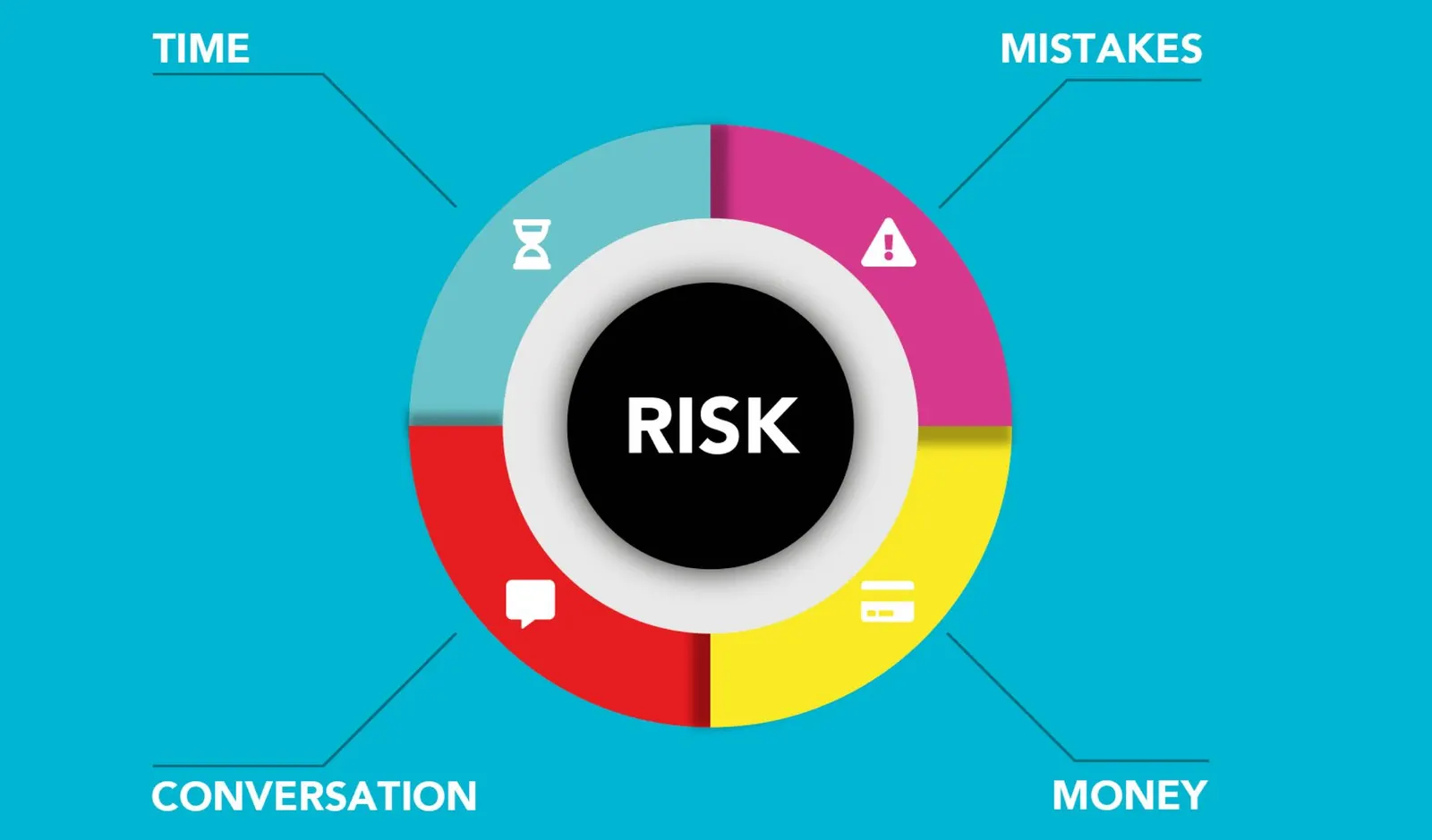
A structured risk analysis lists every potential risk (technical, contractual, human, security), assesses its probability and impact, then defines a mitigation action before the project launch, not midway through.
The method comes down to four steps: identify, qualify, prioritize, treat. Many companies skip the qualification step and rush straight into generic contractual clauses, thinking the contract protects against everything. It only protects against what it anticipates.
- List risks by category: technical, legal, security, human, financial
- Assess each risk on a probability/impact grid
- Prioritize the three or four critical risks that deserve a specific clause
- Define a mitigation plan for each critical risk
- Assign a risk monitoring owner on both the client and provider sides
- Review the mapping at each major project milestone
The risk you haven’t written down in black and white in the contract is always the one that materializes first.
What does software development outsourcing really cost?
The real cost of software development outsourcing always exceeds the displayed hourly rate: you must add project management costs, quality review, cross-cultural training, and the financial risks linked to cross-border taxation.
Comparing hourly rates without looking at the rest is the number one mistake. In 2026, senior developers in Latin America charge $60 to $75 per hour, those in Central and Eastern Europe between $64 and $76, and senior engineers in Asia between $31 and $41. Over a year, hourly rates for SaaS engineers have even fallen by 7.1% in Latin America and 4.4% in Europe, a sign that competition among providers is intensifying, which benefits the client who knows how to negotiate.
Offshore web platform creation price: what makes the bill vary
The price of an offshore web platform creation is never just “number of days x hourly rate.” Three items make the final bill vary far more than the hourly rate itself: the complexity of integrations (payment, third-party APIs, authentication), the level of quality assurance required (manual vs. automated testing vs. both), and the client-side project management time. A vague specification document explodes the number of back-and-forths, thus the number of billable days, far more surely than a slightly higher initial hourly rate. Another often-forgotten item: taxation. In France, a service paid to a foreign company without a permanent establishment in the territory is subject to a 25% withholding tax on the gross amount in 2026 (75% for a non-cooperative state), subject to applicable tax treaty, a point to verify with your accountant before signing.
Offshore SaaS development cost: the calculation method that avoids nasty surprises
To estimate the offshore SaaS development cost without getting trapped, the right method is not to ask “how much does it cost” but to break down the budget into four blocks: pure development (the most visible), quality assurance and testing (often undervalued), project management and communication (almost never quantified upfront), and a contingency reserve of 15 to 20% of the total budget. This reserve is not a luxury: it covers the scope changes that almost systematically occur between V1 of the specifications and the delivered version. A SaaS with AI integration needs or advanced GDPR compliance will mechanically require more quality assurance time, hence a revised upward budget on this specific item.
Comparative hourly costs by region in 2026
This comparison of offshore web development agencies by geographic zone shows a price gap that can exceed double between Asia and Eastern Europe for a senior developer in 2026. The choice of zone is therefore not just a matter of price: it also involves time zone, cultural proximity, and the ease of daily cross-cultural communication.
| Zone | Senior hourly rate |
|---|---|
| Asia | $31 to $41/h |
| Latin America | $60 to $75/h |
| Central and Eastern Europe | $64 to $76/h |
Concretely, for the same project, the choice of geographic zone can make the total development bill vary by a factor of two. It’s not just a budget question: zones closest to the French time zone simplify daily synchronization and reduce the risk of costly misunderstandings on deliverables.
Senior engineers in Eastern Europe charge up to 2.4 times more than those in Asia in 2026
In 2026, the average hourly rate for a senior engineer varies from $36 in Asia (average $31-41) to $70 in Central and Eastern Europe (average $64-76), passing through $67.5 in Latin America (average $60-75). The cost gap between zones far exceeds the observed quality gap.
This price differential does not always reflect an equivalent quality differential. Before arbitrating solely on rate, you must factor in the hidden cost of project management and time zone differences in the overall calculation.
| Element | Value ($/h) |
|---|---|
| Asia | $36/h |
| Latin America | $67.5/h |
| Eastern Europe | $70/h |

What are the specific risks of offshore business application development and how to avoid them?
The specific risks of an offshore business application lie in the functional complexity of the software: misunderstood business rule errors, security flaws on sensitive data, and technical dependency if documentation is absent.
A business application is not a showcase website. It encodes management rules specific to your company, margin calculations, validation workflows, regulatory exceptions. A provider who doesn’t master your sector will produce code that works on the surface but breaks on edge cases, the ones superficial tests never cover.
How to avoid business rule errors and technical dependency?
The costly mistakes on this type of project
- Entrusting business rules to the offshore team without cross-validation by an internal business expert
- Neglecting technical documentation, creating total dependency on the initial team
- Underestimating the need for testing on business-specific edge cases
- Opening broad access to production databases without compartmentalization
- Ignoring the reversibility clause that allows recovering code and rights in case of termination
What is the real cost of a security breach on an offshore business application?
Data security deserves particular vigilance here: the global average cost of a data breach reaches $4.99 million in 2026 according to IBM’s Cost of a Data Breach report, up from $4.44 million in 2025, an increase reflecting the growing sophistication of attacks, not corporate laxity. Also in 2025, IBM measured an average of 241 days to identify and contain a breach. Applied to an offshore business application handling customer or financial data, this detection delay can turn a minor incident into a reputational disaster. The countermeasure: encryption of sensitive data by design, compartmentalized access by environment (dev, staging, production), and an independent security audit before any production deployment.

How to integrate AI into an offshore SaaS while managing software outsourcing risks?
Integrating AI into an offshore SaaS requires clearly separating training data from customer data, documenting every third-party model usage, and planning drift tests to prevent an AI agent from producing inconsistent results in production.
This is the angle most often forgotten in guides on outsourcing: most articles on the risks of offshore development date from before the widespread adoption of AI agents and chatbots in SaaS products. Yet, in 2026, a growing number of offshore-developed SaaS products embed an AI component, recommendation, support chatbot, workflow automation. This component adds a specific layer of risk that the standard contract doesn’t always cover.
Integrating AI into offshore SaaS: the security checklist you can’t skip
Before validating AI integration in an offshore SaaS, four points deserve systematic verification. First, the provenance of the models used: a poorly audited open-source model can introduce biases or security flaws invisible at first test. Next, the processing of data sent to the model, is it anonymized data or raw customer data transmitted to a third-party API hosted outside the European Union? Third, the traceability of decisions made by the AI, especially if the SaaS touches regulated domains (health, finance, HR). Finally, the drift test plan: a model that works well during acceptance testing can drift after several months in production if its input data changes. The offshore provider must document each of these points before production deployment, not after an incident.
How to choose between mobile app development in France and offshore agencies?
The choice between a French agency and an offshore agency depends less on the provider’s nationality than on three criteria: the need for regular physical presence, the regulatory sensitivity of the project, and the cost gap actually justified by complexity.
The real topic isn’t “France vs. offshore”; it’s “which model matches my acceptable risk level.” A well-structured offshore agency, with French-speaking teams and a proven agile method, often delivers quality comparable to a local agency, for a controlled budget. But some projects demand a proximity that only a local presence allows.
Offshore mobile app development from France: when it really works
Offshore mobile app development from France works particularly well when the project is well-scoped upfront and the client has a product owner capable of validating deliverables at each sprint. The most regulatory-exposed sectors (health, banking, sensitive personal data) demand increased vigilance on data localization and provider certifications, but that doesn’t disqualify offshore, it simply imposes stricter contractual clauses on hosting and security audits. Conversely, an MVP or a consumer mobile app with few regulatory constraints lends itself very well to 100% offshore development, with a budget gain that can be reinvested in more product iterations.
Agile method for remote SaaS development: what changes compared to a local team
The agile method for remote SaaS development remains based on the same rituals as a local team, sprints, dailies, retrospectives, but the time difference and physical distance impose concrete adjustments. The daily must be scheduled on a common time slot, even if it means starting the day a little earlier or ending it a little later on one side. User stories must be written with more detail than locally, because informal hallway questions don’t exist remotely. Another key point: the end-of-sprint demo must be recorded or documented, not just presented live, so that all internal stakeholders can consult it even with a time difference. An agency seasoned in this model also knows how to manage different public holidays between countries, a detail that disrupts more schedules than one might think.

Based on your situation: which risk management approach to adopt?
A startup with a B2B SaaS MVP to launch in 6 months
For this startup, the main risk is time, not absolute security. What matters: iteration speed, contract flexibility, controlled cost. The recommendation is an offshore partner using agile methodology with short sprints and weekly demos, even if it means accepting a lighter documentation level in the initial phase, the essential thing is to validate the market quickly; documentation is strengthened once product-market fit is confirmed.
A mid-sized company IT department managing sensitive HR data
Here, the critical risk is compliance and data security, not budget. What matters: server location, strict contractual security clauses, independent audit before production deployment. The recommendation leans towards a hybrid model, scoping and validation of business rules internally or locally, offshore development framed by a detailed service contract on data security and intellectual property.
An e-commerce SME wanting to add an AI chatbot to its platform
For this SME, the main risk is customer experience consistency, not pure technical complexity. What matters: chatbot response quality, clean integration with the existing product catalog, reasonable cost. The recommendation is to entrust the project to a team mastering both web development and AI integration, to avoid the timeline extension linked to coordination between two separate providers on a modest-sized project.
FAQ: additional questions on software outsourcing risks
What are the biggest risks of outsourcing software development?
The biggest risks of outsourcing software development include misunderstood business requirements, intellectual property theft, data security breaches, hidden costs from poor scoping, and total technical dependency on the provider due to absent documentation.
How to mitigate risks when outsourcing software development?
Mitigating software outsourcing risks involves mapping risks before signing, choosing a verified partner, drafting a precise contract covering IP and security, implementing agile governance with weekly syncs, and conducting independent security audits before production.
What are the common challenges in offshore software development?
The common challenges in offshore software development include time zone misalignment, cultural communication gaps, vague specifications leading to incorrect deliverables, lack of direct access to developers, and difficulty enforcing quality standards remotely.
What are the security concerns with outsourcing software?
The security concerns with outsourcing software include unauthorized access to sensitive data, lack of encryption, insufficient access compartmentalization between environments, and the risk of data breaches going undetected for months when the provider lacks proper monitoring.
Mastering software outsourcing risks is anything but a theoretical exercise: it’s a discipline played out in the choice of partner, the precision of the contract, and the rigor of follow-up, sprint after sprint. A poorly scoped project at the start can never truly be recovered midway through. If you’re preparing a custom software development project and want to frame the risks from the request for proposals stage, a conversation with a team that practices offshore daily, with French-speaking contacts from start to finish, can save you several weeks of scoping.