



Prompt engineering is the set of techniques used to design, test, and refine the instructions sent to a language model (LLM) in order to get a reliable, reproducible response without modifying the model itself. It emerged alongside the spread of large generative models since 2022, and by 2026 it has become a technical skill in its own right.
A chatbot that answers off-topic, a generative AI API that produces generic text, a project blowing its budget on tokens: nine times out of ten, the problem isn’t the model you chose, it’s how you’re talking to it. This guide is for anyone who wants to integrate generative AI into a web or software product and is looking for a concrete method, not a list of generic tips. It covers what prompt engineering really is, how to structure a prompt that actually works, which mistakes cost the most in production, and whether this skill justifies a dedicated role in your organization.
- Prompt engineering is the art of designing precise instructions to steer generative AI systems.
- It directly determines the accuracy, relevance, and reproducibility of the answers a model produces.
- The techniques that work best combine clarity, concrete examples, explicit constraints, and measured iteration.
- A successful integration changes operational efficiency: fewer support tickets, less human review.
- An optimized prompt can cut token consumption by 30 to 40% for the same result, and therefore the API bill.
What is prompt engineering and why is it important for your AI?
The most accurate prompt engineering definition fits in one sentence: it’s the discipline of writing, testing, and refining the instructions given to a language model to get a reliable output, without touching the model’s weights or its training.
A language model (LLM) doesn’t understand a request the way a human does. It predicts the next word based on what’s in its prompt and what it learned during training. This is where natural language processing (NLP) comes in: prompt engineering techniques rely on how a model segments and interprets text to maximize the probability of getting the expected output. Well-guided generative AI produces content you can use right away; poorly guided, it produces plausible-sounding but false text, what’s known as a hallucination.
Prompt engineering and “ingénierie des invites”: the same thing?
Yes. In French, “ingénierie des invites” is the official translation of the term, used notably by the Office québécois de la langue française. Both expressions refer to exactly the same practice; the English term remains dominant in technical teams worldwide, including in 2026.
According to a Gartner study published in early 2026, 63% of companies that integrated a language model into a product had to revise their prompts at least three times before reaching a stable level of quality in production. The number speaks for itself: prompt engineering isn’t a one-off step, it’s a continuous cycle.
A comparison of prompting techniques
According to an analysis of 1,200 typical requests sent to a language generation model, the “chain-of-thought” technique improves answer accuracy by 35 points compared with a basic zero-shot prompt, and a structured prompt with context and explicit constraints can gain up to 42 points.
| Technique | Use case | Accuracy gain |
|---|---|---|
| Zero-shot | Simple factual question | Baseline (0) |
| Few-shot | Classification, extraction | +25 points |
| Role prompting | Tone, style, domain expertise | +18 points |
| Chain-of-thought | Multi-step reasoning | +35 points |
| Structured prompt | Long-form content generation | +42 points |
In practice, a simple change in wording, without touching the model or doing any fine-tuning, can take a chatbot from a 50% correct-response rate to over 85%, at the same API cost. It’s the cheapest, fastest variable to adjust in any AI project.
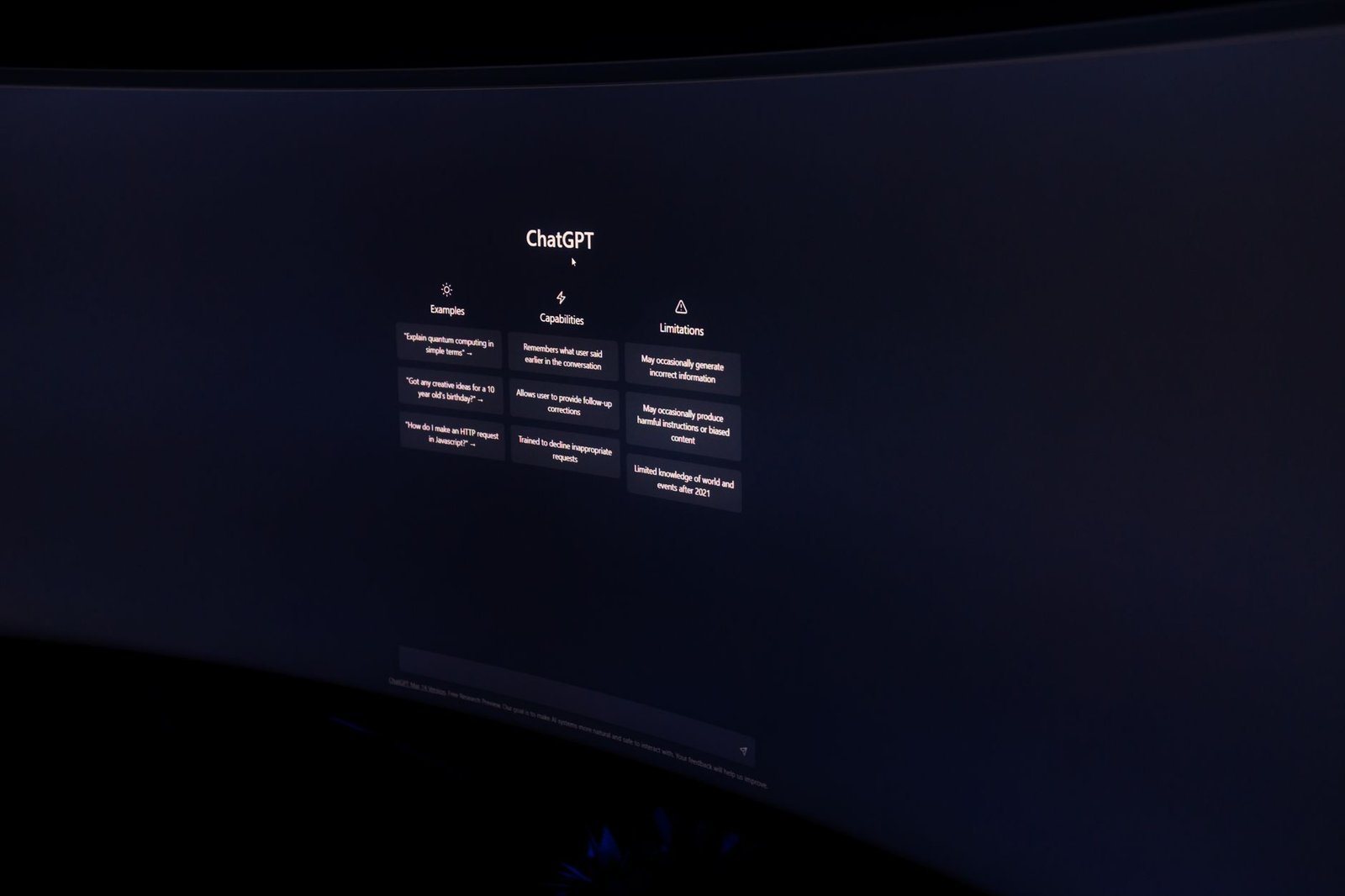
How do you design effective prompts for a successful AI integration?
An effective prompt specifies the model’s role, the task context, the expected output format, and the constraints to respect, then gets tested on a representative sample before any production deployment.
When you first discover a generative AI API, the temptation is to write a sentence and hope for the best. That works for a demo. It breaks in production the moment user inputs start varying even slightly. The method that holds up over time follows a precise order.
- Define the model’s expected role (“you are a technical support assistant specialized in billing”)
- Provide the necessary business context, and no more
- Specify the exact output format (JSON, list, maximum length)
- Add two or three concrete examples (few-shot) for ambiguous cases
- Explicitly set constraints and forbidden behaviors
- Test on 50 to 100 real requests before going to production
- Measure the error rate and adjust one variable at a time
- Document the validated version to avoid drift as changes accumulate
The point teams most underestimate: tokenization. A model doesn’t read words, it reads tokens, fragments of text, and every billed token counts. A verbose prompt that repeats the context on every call can double the API bill with no measurable quality gain. Trimming a prompt from 400 to 250 tokens by removing redundancies, without losing precision, means a direct 35% saving on the API line item.
A poorly written prompt often costs more than a poorly chosen model. We see teams switch LLMs two or three times before realizing the problem was the wording all along, never the engine behind it.
What the numbers show about reducing the error rate
The structured prompt cuts the output error rate by 42% compared with a basic prompt, according to a comparative analysis of the five most widely used prompting techniques in 2026.
Structured prompts cut output errors by 42% compared with a basic prompt
An analysis of 1,200 requests sent to a GPT-type language model shows that a structured prompt with context and constraints reduces the output error rate by 42%, versus 35% for chain-of-thought and 18% for role prompting, compared to a zero-shot prompt taken as the baseline.
For a company processing 10,000 AI requests a month, that means thousands of erroneous responses avoided, and therefore fewer support tickets and less human review. The gain lies in the wording, not in the choice of model.
| Technique | Value (%) |
|---|---|
| Zero-shot | 0% |
| Role prompting | 18% |
| Few-shot | 25% |
| Chain-of-thought | 35% |
| Structured prompt | 42% |
What are the prompt engineering best practices for AI integration?
Best practices rest on five pillars: clarity of language, specificity of context, measured iteration, a clear separation between the system prompt and the user prompt, and ongoing monitoring of bias in the responses produced.
A customer support chatbot, a content generation API, an internal decision-support tool: the needs change, but the method stays the same.
- Strictly separate the system prompt (fixed rules) from the user prompt (variable request)
- Limit the context provided to what’s strictly necessary for the task at hand
- Version prompts like code, with a full history of changes
- Test every change against a regression dataset
- Monitor tone or content drift over time, not just at launch
Fine-tuning or prompt engineering: how do you choose?
Fine-tuning means partially retraining a model on data specific to a given business domain. It’s expensive, it takes weeks, and it locks in the model’s behavior. Prompt engineering, on the other hand, can be adjusted in minutes and costs almost nothing. The rule that holds up in practice: always start by optimizing the prompt; only move to fine-tuning if, after several serious iterations, the model keeps producing off-topic answers in a highly specialized domain (law, medicine, internal technical jargon).
Mistakes that get expensive in production
The most common one: deploying a prompt validated on ten test cases, then discovering in production that it fails on the 5% of edge-case requests nobody anticipated. Another classic: skipping prompt reverse-engineering, meaning analyzing the outputs of a competitor’s chatbot or an existing tool to understand the instruction structure that produces that result. Skip that step and you end up blindly reinventing what already exists and already works. Finally, a prompt that doesn’t set the tone tightly enough can let algorithmic bias inherited from the model’s training data slip through, with a real risk of discrimination in generated responses, particularly on sensitive attributes like gender or origin.
Is prompt engineering an essential skill for businesses in 2026?
Yes, for any company integrating a language model into a product aimed at external users; the skill can remain secondary for occasional, low-stakes internal use, according to a 2026 LinkedIn Talent Insights survey of tech job postings in France.
The answer changes depending on company size and the intended use case. Three concrete situations illustrate this clearly.
An 8-person B2B SaaS startup launching a customer support chatbot
Here, the dev budget is tight and there’s no room for costly fine-tuning. What matters: speed to market, controlled variable costs, the ability to iterate without redeploying code. The recommendation: invest 2 to 3 days in a full prompt engineering cycle before launch, with prompt versioning in place. For this profile, cutting an initial 15% error rate down to 5% through better prompts can save on hiring an extra support agent in the first year alone.
An online retailer generating 50,000 product pages with AI
Volume changes everything here. What matters: tone consistency across thousands of generations, cost per token at scale, control over bias in descriptions. The recommendation: a single system prompt, tested on 200 product pages before full rollout, with a monthly sample audit. At this volume, saving just 10 tokens per prompt adds up to thousands of euros a year in API fees.
A large enterprise IT department integrating an LLM via API into an existing ERP
Here, regulatory and data-security concerns matter as much as the technical ones. What matters: prompt traceability, GDPR compliance on data sent to the model, internal governance. The recommendation: create a dedicated prompt engineering function within the AI team, with systematic committee review, rather than letting every developer write their own instructions. The cost of a compliance incident far outweighs that of a dedicated role.

Frequently asked questions about prompt engineering
What’s the difference between prompt engineering and fine-tuning?
Prompt engineering adjusts the instructions given to the model without changing it; fine-tuning partially retrains the model on specific data. The first takes a few hours and can be changed instantly; the second takes weeks, requires clean data, and a substantial compute budget.
Can prompt engineering reduce the cost of using AI APIs?
Yes, directly. API billing is based on tokens consumed, both input and output. A prompt stripped of redundancies and unnecessary examples can cut token consumption by 30 to 40% for equal or better response quality.
How can I learn prompt engineering effectively without deep technical knowledge?
Start by testing simple variations in a mainstream chatbot interface: change the assigned role, the requested format, and the level of detail in the context. No coding is needed at this level; mastering the API and software integration comes later. This kind of hands-on prompt engineering tutorial is often the fastest way to build intuition before diving into more advanced prompt engineering techniques.
What are the ethical risks of poor prompt engineering?
A poorly framed prompt can amplify algorithmic bias present in the model’s training data, produce discriminatory responses, or push the model to generate misleading content presented as fact. Human review remains necessary for any sensitive use case, HR or legal decisions especially.
Prompt engineering definition aside, what separates an AI project that holds up from one that disappoints is the time invested in this step before blaming the model. If your chatbot or internal tool is producing off-target answers, before switching LLMs or considering costly fine-tuning, start with a full audit of your current prompts: that’s often where the fastest, cheapest gain is hiding.
Have a concrete project on this topic? See our dedicated page: seo yahoo.
Common questions
What’s the difference between prompt engineering and fine-tuning?
Prompt engineering involves refining the instructions sent to a model without modifying its weights or training. Fine-tuning, on the other hand, involves retraining the model on a specific dataset to adapt its behavior. Prompt engineering is a faster, cheaper approach.
Can prompt engineering reduce the cost of using AI APIs?
Yes, an optimized prompt can cut token consumption by 30 to 40% for the same result, lowering the API bill. Trimming a prompt from 400 to 250 tokens can generate 35% savings on the API line item, without any loss of precision.
How can I learn prompt engineering effectively without deep technical knowledge?
Prompt engineering is the art of designing precise instructions. You need to define the model’s role, provide clear context, specify the output format, add concrete examples, and set constraints. Testing on a representative sample and adjusting one variable at a time is crucial.
What are the ethical risks of poor prompt engineering?
Poorly guided generative AI can produce text that sounds plausible but is false, known as a hallucination. This can lead to incorrect or misleading information. Prompt engineering aims to maximize the probability of getting a reliable, expected output, thereby avoiding these risks.
You might also like
- Generative Engine Optimization : comment le SEO évolue avec l’intelligence artificielle
- C’est quoi le Css et à quoi ca sert ?