



A bakery owner running three locations doesn’t have time to read a white paper on artificial intelligence. They want to know what it can save them this week, at what cost, and without hiring a developer. The good news: by late 2025, OpenAI confirmed what several industry players have been saying for months—simple, low-cost use cases already exist for businesses without a technical team. Here’s how to get started with AI for small business without wasting time or money on the wrong tools.
To get started with AI in a small business in 2026, pick a mainstream tool (ChatGPT, Gemini, Canva AI), apply it to a single repetitive task (customer replies, writing, data sorting), and budget between €20 and €85 per month depending on team size—no technical skills required.
- AI is no longer reserved for large corporations: subscriptions at €20–25/month are enough to get started in 2026.
- No coding needed: no-code tools and conversational assistants do the work from the moment you sign up.
- Automating repetitive tasks (emails, invoices, customer responses) frees up several hours per week.
- A structured training program accelerates adoption and prevents costly false starts.
- Expect a 2- to 4-week adaptation period before seeing a clear net gain—that’s normal, not a failure.
How to start an AI for small business project without breaking the bank
Starting without overspending means picking one specific use case, testing a tool under €25/month for a month, then expanding only if the time saved is measurable. The classic mistake: trying to automate everything in the first month.
Budget is never the real obstacle. The real obstacle is a lack of method. We often see business owners subscribe to three different tools in the same week, spend two hours configuring them, then give up because there’s no visible result. The right approach is the opposite: one task, one tool, one month of testing.
- List the repetitive tasks that take more than 30 minutes a day
- Pick the easiest task to automate (not the most important one)
- Test a single tool for 30 days without switching
- Measure the time actually saved, not the time you assume you’ll save
- Train one team member to become the go-to person for that tool
- Expand to a second task only after this first success
For a very small business of 3 to 10 people with average digital maturity, the first-year investment is around €2,000 to €3,000, including tools and training, with a recurring cost of about €85/month. That’s the ballpark figure to aim for a reasonable start, not a ceiling to hit in the first month.
Mistakes that cost you dearly at the start
The first mistake: buying a per-user license before validating the use case. The second: confusing automation with total delegation—a poorly configured chatbot that gives a wrong answer to a customer costs more in reputation than the subscription itself. The third: ignoring the learning curve. Teams need 2 to 4 weeks to adapt before achieving a net gain; expecting results by day three leads straight to abandoning the project.
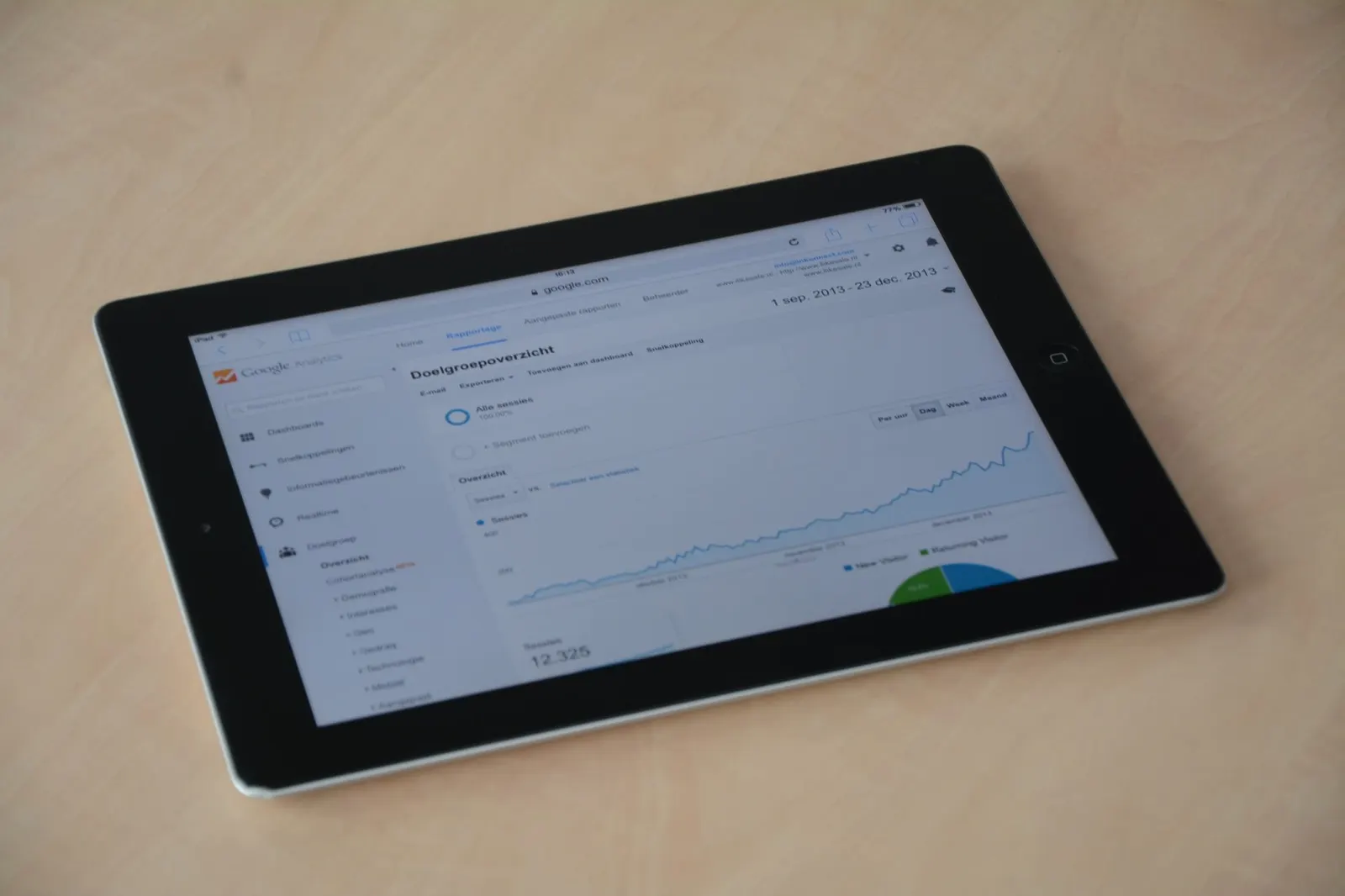
How AI helps small businesses grow in practical terms
In practice, small businesses use generative AI to write marketing content, automate customer service, sort sales data, and prepare newsletters—time-consuming tasks that are never strictly strategic, but weigh heavily on a solo business owner’s schedule.
Let’s take a simple example: a tradesperson who receives twenty quote requests per week by email. Before, they replied one by one, in the evening. With an AI assistant connected to their inbox, they sort, prioritize, and pre-draft responses in a few minutes. The gain isn’t magic; it’s arithmetic: less time on admin, more time on the craft.
Same logic on the marketing side. An SME selling products online can use generative AI to produce product descriptions, social media visuals, and regular newsletters, without an external agency. The tool doesn’t replace strategy—it executes what a human has already decided, faster. Allow 2 to 4 weeks of team training and adaptation before seeing a net gain.
- Automated customer service: answering FAQs, qualifying requests
- Personalized marketing: contact segmentation, newsletters tailored to each profile
- Data-driven decision making: automatic dashboards from sales data
- Administrative productivity: meeting summaries, report writing, invoice follow-ups
Which AI tools for small business growth are truly accessible and effective for entrepreneurs on a tight budget?
The truly accessible tools in 2026 range from €13 to €50 per month depending on the use case: Canva AI for visuals, ChatGPT Plus or Gemini Pro for writing, Copy.ai for marketing, HubSpot AI for customer tracking. A combined budget of €35/month (ChatGPT + Canva) already covers the essentials for a commercial activity.
One tool per use case, not a Swiss Army knife. Most generic comparison sites line up ten solutions without specifying which one matches which task, leading you to pay for features you’ll never use.
Overview by budget and use case
For content writing, ChatGPT Plus (around €22/month) remains the easiest benchmark to get started with. For visuals—posts, flyers, product images—Canva AI at €13/month covers almost all the needs of a small structure. To go further with automated marketing, Copy.ai (€36/month) or HubSpot AI (from €50/month) become relevant as soon as you’re managing several campaigns in parallel. Gemini Pro, at €22/month, positions itself as a direct alternative to ChatGPT, with a clear advantage: native integration into the office tools already used by many businesses.
What about a team, not a solo operator?
As soon as the team exceeds two or three people, costs change scale. For ten employees, the budget for generative AI tools generally climbs to between €200 and €500 per month, depending on the number of licenses and the level of features activated. Microsoft 365 Copilot, for example, charges €30 per user per month—a coherent choice if the company already works within Microsoft 365, but one to avoid if not: paying for an ecosystem you don’t use is the most frequent budget mistake we see in small structures.
AI by use case and monthly budget 2026
The table below compares the most accessible AI tools for a small business by their primary use case and monthly cost in 2026; Canva AI remains the cheapest at €13/month, HubSpot AI the most advanced starting at €50/month.
| Tool | Primary Use | Monthly Cost |
|---|---|---|
| Canva AI | Marketing visuals | €13 |
| Gemini Pro | Writing and analysis | €22 |
| ChatGPT Plus | Writing and responses | €22 |
| Copy.ai | Marketing content | €36 |
| Microsoft 365 Copilot | Integrated office suite | €30/user |
| HubSpot AI | Advanced customer tracking | €50+ |
For a business owner just starting out, this comparison avoids the classic mistake of subscribing to the most comprehensive tool first. It’s better to start with Canva AI or ChatGPT Plus, validate the use case for a month, then move upmarket only if the need genuinely justifies it.

How does Gemini concretely reduce costs compared to other AI tools?
Gemini Pro costs €22/month, the same price as ChatGPT Plus, but its economic advantage comes from its direct integration into Google Workspace: no additional license needed to connect AI to Sheets, Gmail, or Docs, unlike solutions that require paid third-party connectors. A business already using Google Workspace for email and documents avoids a costly integration layer in development or additional subscriptions. Gemini activates directly within the existing cloud environment. For a team of 10 people, the cost of generative AI tools can range from €200 to €500 per month in 2026: staying within the Google ecosystem without third-party connectors allows you to aim for the lower end of that range. For comparison, Microsoft 365 Copilot charges €30 per user per month, and marketing tools like HubSpot AI start at over €50 monthly. The absence of hidden integration fees makes Gemini an immediate lever for small structures wanting to automate without straining their cash flow.
Immediate time savings on daily tasks
Concretely, transforming raw sales data into a clear dashboard happens from Sheets, without export or third-party tools. The same goes for drafting a customer reply from Gmail, or generating a report in Docs. The savings are also measured in configuration time avoided and the absence of additional training to plan for, since teams already work in this environment. The adaptation time to AI is generally 2 to 4 weeks before achieving a net gain; starting with a tool integrated into daily applications shortens this delay.
The choice of an AI tool should never be based on the sticker price alone: integration into the existing ecosystem often weighs more heavily than the few euros difference between two subscriptions.
Is investing in AI for small business always profitable?
No, not always: profitability depends on the volume of repetitive tasks to automate. Below a certain activity threshold, the time saved doesn’t cover the cost of the tool or the training time; above it, the return on investment becomes clear within the first few months.
This is the point sales pitches carefully avoid. A business that handles two customer emails a day has no reason to automate its customer service—the setup time will far exceed the time saved over the year. On the other hand, a business that handles fifty has everything to gain.
The calculation remains simple to do yourself: time saved per week multiplied by the hourly rate of the owner or the employee concerned, compared to the monthly cost of the tool plus the initial training time (2 to 4 weeks, let’s remember). If the equation leans heavily in favor of the gain, the investment is justified. If not, it’s not the right time—or not the right use case.
For a first automation workflow that’s a bit more advanced than a simple subscription (connection between two tools, automatic task triggering), the recurring cost climbs to €60–150/month, or €800 to €1,900 per year. This is the tier above the simple individual subscription, to be considered only once the first use case is validated.
The role of a structured training program
Dedicated training on personalized AI assistants costs €2,800 excluding VAT in France, and can be 100% funded by the OPCO depending on the company’s eligibility—a detail many business owners are unaware of and which completely changes the profitability calculation, since the real cost to the company can drop to zero.
AI tools and recurring cost by use case: from €13 to €50 per month in 2026
This chart compares the real monthly cost of several AI tools accessible to small businesses in 2026, with Canva AI being the least expensive and HubSpot AI the most costly in the selection. The observed public prices range from €13 for Canva AI to €50 and above for HubSpot AI, with ChatGPT Plus and Gemini Pro at €22 and Copy.ai at €36.
For a limited budget, Canva AI and Gemini Pro offer the best entry point. HubSpot AI is only justified once the need for advanced customer tracking is clearly identified, not before.
| Item | Value (€/month) |
|---|---|
| Canva AI | €13/month |
| Gemini Pro | €22/month |
| ChatGPT Plus | €22/month |
| Copy.ai | €36/month |
| Microsoft Copilot | €30/month |
| HubSpot AI | €50/month |

Based on your situation: which starting point to choose?
A craftsperson selling their creations online, solo, with no employees
Their main problem: time spent on social media and customer replies, at the expense of production. For them, Canva AI (€13/month) for visuals and ChatGPT Plus (€22/month) for writing product descriptions and template responses are more than enough. Total budget: €35/month, consistent with the ideal budget observed for starting digital marketing in 2026. No need for complex automation at this stage.
An SME of 20 employees in a rural area with an active sales department
Here, the volume of customer data and quotes justifies a more structured tracking tool. HubSpot AI or Microsoft 365 Copilot (€30/user/month) become relevant for centralizing data-driven decision making. For a structure of this size, plan for €500 to €800/month in recurring costs and a first-year investment of €20,000 to €35,000 all-in, including training—a budget on a completely different scale from a very small business.
A firm of three independent consultants in partnership
The dominant need: writing reports and preparing newsletters for their clients. Gemini Pro, especially if they already use Google Workspace for their shared documents, avoids costly integration. Estimated recurring cost around €85/month for the three partners, with an overall investment of €2,000 to €3,000 in the first year, including training.
Have a concrete project on this topic? See our dedicated page: Skyward Agency client reviews.
Frequently asked questions about AI for small business
Is AI difficult to integrate into a small business?
The lack of time to test tools, the absence of in-house technical skills, and the difficulty of choosing among the available options are the most frequent obstacles. The team adaptation time (2 to 4 weeks) is often underestimated, which pushes some to abandon before achieving a net gain.
How much does AI cost for small businesses?
Yes: training on personalized AI assistants, billed at €2,800 excluding VAT, can be 100% covered by the OPCO if the company meets the eligibility criteria. The actual out-of-pocket cost is therefore often zero, provided you anticipate the processing time for the application.
Can AI really save small businesses money?
The most reliable criterion remains the time actually saved on the automated task, measured before and after over four weeks. Comparing this gain to the monthly cost of the tool gives a concrete return on investment, more meaningful than any abstract productivity indicator.
AI no longer requires a mid-cap budget or a technical team to produce a concrete result in a small structure. The real work lies in choosing the right use case, at the right price, and accepting the few weeks of adaptation before the net gain. If framing this choice alone seems unclear, Skyward Agency supports small structures on this initial AI diagnosis, from tool selection to custom automation, with a quote established after a real needs assessment.